

Salt Water and Skin: Pros and Cons – Updated Article With Extra Information
The ocean contains many vital elements that we need: vitamins, trace elements, mineral salts, amino acids, hormonal and bacteriostatic substances that have biological balancing effects, and living microorganisms that secrete antibiotic. The body easily assimilates these substances when bathing in salt water. In addition, it has been discovered that sea water is similar in composition to our blood plasma.
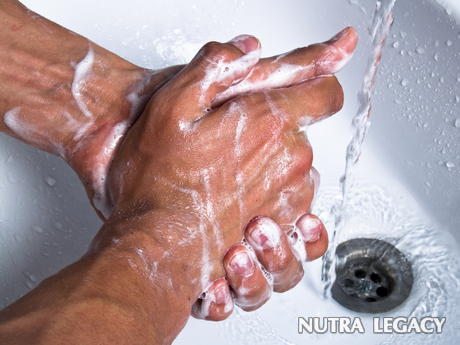
There is a lot to be said about salt water skin care. Some research has found that salt water can be used to treat acne, eczema and psoriasis. Salt water baths are excellent for salt water skin care, because they eliminate toxins through open pores. Besides that, salt water baths assist with decreasing inflammation and improve your circulation, which may help heal sore muscles.
Bathing in ocean water is even better and more therapeutic. It helps relieve certain chronic disorders, aches and pains. Bathing in sea water may calm one’s nerves and tends to tranquilize the body. This process also tones the body and makes it resilient. Bathing in sea water puts you in contact with waves that are massaging and pulsating, and is full of dissolved gases and rare minerals.
Salt in general has a variety of healing properties. It can make a useful base for toothpaste, mouthwash, bee and insect sting treatment, etc. However, there is also more to be said about salt water skin care. To give yourself a homemade facial, you can combine salt and olive oil, and proceed to apply the mixture on to the face. After washing it off, you will discover that your face feels rejuvenated and tingly. If you have dry itchy skin, salt water skin care can help you as well. After taking a shower or bath, rub some salt into freshly bathed skin. Such rubbing assists with increasing circulation and the friction from the process removes dead skin – the cause of itchiness.
There are also some negative effects to swimming in the sea that you should know about, but these are minimal. First of all, the water may contain pathogens, which are not always visually detectable. Secondly, you may be running a risk when bathing in turbid water. It may contain harmful microorganisms or suspended solids.
Also, if the water you bathe in has a very high concentration of salt, your skin may end up feeling slimy and unclean. Unfortunately, most common soaps do not work well with cleaning off salt, meaning that your skin may not get clean for quite a while. This may cause some more long-term problems, including salt water acne. Sometimes salt water might lead to over-softening of your skin, which may not always be desirable.
For the original article, click here
For more information, go to:
en.wikipedia.org
The information supplied in this article is not to be considered as medical advice and is for educational purposes only.
|
7 Responses to “Salt Water and Skin: Pros and Cons – Updated Article With Extra Information”
| ||||||||||||||


 15 Oct 2010
its a great adventure! go ahead and try. have been using salt and lemon juice on pimples/blackheads and the results are great. bravo for the idea.July 26th, 2010 at 5:09 pm
mr bean - i am trying to do the same thing. can you tell me what uv lamp you use? my email is lflossy25@aol.com. thanksApril 22nd, 2010 at 7:01 pm
I've found via personal experiments a good prevention for pimples. I use a 0.5l bottle that I fill with mineral water, add 1-2 tea spoons of sea salt and about 10 drops of Iodine tincture (5%), so that the solutions gets brownish. I apply it to my face after I wash it 2 times a day. Not only it makes any kind of pimples recede, but also improves the look of the skin (I have oily skin). Another thing I do but I don't recommend is to use a UV lamp to treat the skin. I have used this during winter when I have exams and don't go out for long periods of time. If you don't have any medical knowledge about the effect of UV on cells and how to protect your skin I don't recommend you do this. Just go in the sun, best on mountain. All this I made because I noticed my pimples recede after going to the sea, so I tried to recreate the conditions. Vitamins also help your skin, noticeably Vit.C, A and D.February 27th, 2010 at 11:09 am
Dear Fran, That is very good t hear that the salt is helping you. You might even find better results by switching from Morton's table salt to a true sea salt. Sea salt is rich in naturally occurring minerals and I believe the healing effect on your scalp would be better. Table salt is usually de-mineralized with only iodine added back in. Also, to help improve healing after the crust is removed. consider calendula ointment. It can help with not only healing, but easing skin discomfort. Calendula (or Marigold) is a pre-eminent skin healer in homeopathy. In Good Health, MeredithApril 3rd, 2009 at 11:57 am
I have terrible scalp psoriasis and I have noticed that my always crusty scalp always feels better and seems to clear some while I'm at the beach. Further, I've been reading that salt water helps on the psoriasis websites. Last night, I just mixed mortons table salt with coconut oil and applied to my scalp. A few minutes later, I was able to start scratching away the crust and today my scalp feels wonderful. The crust usually softens some from just the coconut oil but when I remove the crust, it leaves my scalp sore & a scab usually forms leaving me still uncomfortable. I'm very excited about this.March 28th, 2009 at 6:09 pm
Hi Leticia. Thats awesome that you cleared your skin using salt water! I have moderate acne myself. I was wondering, what kind of salt did you use? And did you just splash some on your face and leave it to soak in?March 30th, 2009 at 4:49 am
It may not work for everyone, but salt water finally cleared up my acne. I'd had moderate acne for over 5 years and had tried everything without success - until, as a last resort, I started putting salt water on my face twice a day. My skin looks amazing now and everyone notices it! Plus it doesn't have the harsh side effects of some prescription drugs I tried. Why not give it a go?January 19th, 2009 at 4:25 pm